
What Are the Essential Categories of Environmental Monitoring Instruments?
Environmental field programs depend on accurate, legally defensible field data. Whether conducting Phase II Environmental Site Assessments (ESAs), monitoring groundwater remediation systems, tracking ambient air emissions, or managing industrial wastewater discharge, field personnel rely on rugged, calibrated environmental monitoring instruments.
Securing reliable testing instruments requires deciding between capital equipment purchases and flexible rental programs. Environmental consulting firms, industrial hygiene teams, and municipal authorities often use a hybrid model—renting specialized or project-specific analyzers while purchasing daily monitoring instruments.
Partnering with a full-service, woman-owned provider like Environmental Equipment + Supply simplifies this process. Based in Harrisburg, Pennsylvania, and serving environmental professionals nationwide across the United States, Environmental Equipment + Supply pairs precision instrumentation with field-tested safety supplies, factory-certified maintenance, and rapid turnaround on rental fleets.
Water Quality and Hydrological Monitoring Equipment
Groundwater and surface water assessments represent the core workload for many environmental field crews. To verify ecological health and track contaminant transport, technicians use specialized electronic sensors and sampling systems:
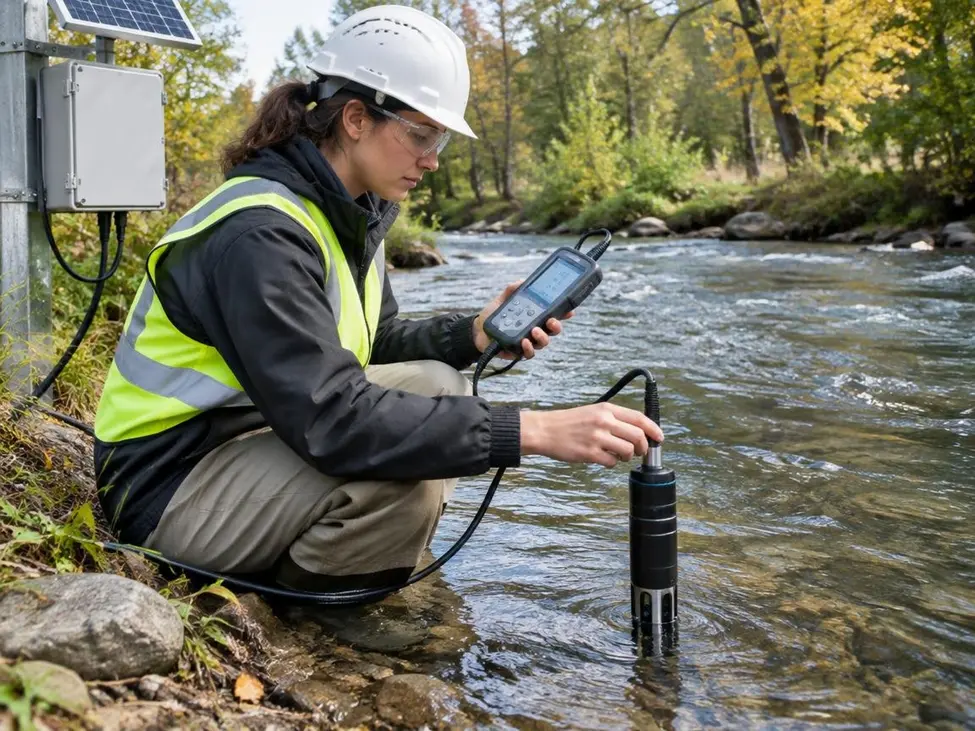
- Multi-Parameter Water Quality Sondes: Handheld meters equipped with swappable sensors measure dissolved oxygen (DO), pH, oxidation-reduction potential (ORP), specific conductivity, salinity, total dissolved solids (TDS), turbidity, and temperature in real time.
- Water Level Meters and Oil-Water Interface Probes: Precision engineering tapes with optical and conductivity sensors detect water tables and accurately differentiate non-aqueous phase liquids (LNAPL and DNAPL) down to 1/100th of a foot.
- Low-Flow Purging and Sampling Pumps: Adjustable-rate bladder pumps, electric submersible pumps (such as Proactive or Whale pumps), and portable peristaltic pumps minimize sample turbidity and prevent volatile degassing during micro-purge sampling.
- Laboratory-Grade Field Photometers and Colorimeters: Portable spectrophotometers rapidly analyze trace metals (such as hexavalent chromium, lead, and copper), nitrates, phosphates, and chemical oxygen demand (COD) in surface runoff and industrial discharge points.
Air Quality, Gas Detection, and Volatile Organic Compound (VOC) Analyzers
Atmospheric monitoring demands rapid sensor response times to detect toxic vapors, combustible atmospheres, and particulate matter before they pose health risks to field teams or adjacent communities.
- Photoionization Detectors (PID) and Flame Ionization Detectors (FID): PIDs equipped with 10.6 eV or 11.7 eV lamps detect volatile organic compounds (VOCs) like benzene, toluene, ethylbenzene, xylenes (BTEX), and chlorinated solvents down to parts-per-billion (ppb) or parts-per-million (ppm) levels. FIDs use a hydrogen flame to ionize broad-spectrum hydrocarbons across wider linear ranges.
- Four-Gas and Multi-Gas Personal Survey Monitors: Essential for confined space entry in manholes, remediation trenches, and underground storage tank (UST) vaults. These units continuously track lower explosive limits (LEL), oxygen levels (O2), hydrogen sulfide (H2S), and carbon monoxide (CO).
- Particulate Monitors (PM2.5, PM10, and Total Suspended Particulates): Optical laser photometers provide continuous, real-time dust monitoring along industrial fence lines, soil remediation perimeters, and active construction sites to verify National Ambient Air Quality Standards (NAAQS).
Soil Sampling and Radiological Survey Instruments
Evaluating subsurface contamination and radiological anomalies requires heavy field mechanics combined with high-sensitivity analytical detection.
- Direct-Push Soil Core Samplers and Vapor Pin Implants: Dual-tube soil core liners capture undisturbed continuous soil stratigraphy, while sub-slab soil gas pins and temporary vapor implants permit sampling of chlorinated solvent plumes threatening indoor air.
- Radiological Survey Meters: Handheld Geiger-Mueller (GM) pancake detectors, sodium iodide (NaI) scintillation probes, and personal dosimeters isolate alpha, beta, gamma, and X-ray radiation during brownfield remediation, industrial decommissioning, and emergency response operations.
- Field Test Kits: Colorimetric soil screening test kits and immunoassay assays provide instant semi-quantitative screening for total petroleum hydrocarbons (TPH), polychlorinated biphenyls (PCBs), and pesticide residues prior to sending confirmation samples to fixed laboratories.
What Features Give Field Work Gloves ‘Boxer-Like’ Impact and Hazard Protection?
Field technicians routinely handle heavy equipment, steel drill rods, casing pipes, and jagged core sleeves. Crushing and pinching hazards on the hands make up the most significant portion of the injuries sustained by field workers each year.
To prevent blunt-force trauma, bone fractures, and soft tissue pinch wounds, modern field gloves borrow engineering concepts from boxing gloves and martial arts armor. Boxing gloves use layered foams and molded composites to disperse striking forces across the metacarpal bones. Similarly, heavy-duty industrial field gloves integrate segmented armor and energy-absorbing materials that dissipate crushing kinetic energy before it reaches fragile finger bones.
Knuckle Padding and Pinch Hazard Shielding
When wrestling heavy well casings, installing submersible pumps, or clearing dense brush around monitoring wells, hand injuries often occur from dropped tools, shifting steel drums, or hydraulic direct-push pinch points.
- Thermoplastic Rubber (TPR) Exoskeletons: Molded TPR armor is sonically welded or heavy-stitched to the dorsal side of the hand, spanning from the wrist across every individual finger segment. This creates an external crumple zone that absorbs and redirects compressive energy away from the bones.
- Dense Knuckle Deflection Shields: Raised, high-density padding across the knuckles prevents abrasions and blunt-force impacts against concrete well pads, drill rig tooling, and heavy generator frames.
- Glove Safety Standard Verification:ANSI/ISEA 138 (Impact Protection): Gloves are graded from Level 1 (lowest force reduction) to Level 3 (highest force attenuation, transmitting less than 4 kilonewtons of peak force across knuckles and fingers).
- ANSI/ISEA 105 (Cut and Abrasion Standards): Cut resistance ranges from A1 (light hazards) to A9 (extreme slicing resistance), while abrasion and puncture scales (graded 1 to 5) measure resilience against rough rock cores and abrasive casing threads.
Puncture, Cut, and Thermal Resistance for Outdoor Terrains
Environmental fieldwork requires navigating unpredictable, overgrown ecosystems filled with structural and biological hazards:
- Goatskin and Pigskin Leather Construction: Naturally high in lanolin, top-grain pigskin and goatskin provide high tensile strength and puncture resistance while remaining supple even after getting wet in rain or groundwater discharge.
- Elbow-Length Gauntlet Sleeves: Extended cuffs protect forearms against dense thorn brush, brambles, toxic plants (poison ivy and sumac), and abrasive rock outcroppings.
- Cut-Resistant Structural Liners: High-performance polyethylene (HPPE), aramid fibers, and Kevlar blends shield against broken glass sampling jars, rusty well covers, and jagged metal shards.
- NFPA Thermal Compliance: For wildfire boundary assessments, prescribed burn safety monitoring, and high-heat field sampling, National Fire Protection Association (NFPA) certified gloves offer flame-resistant leather and thermal barriers that will not melt or conduct intense ambient heat.
Ergonomics and True Women-Specific Fit
For more than 50 years, the safety industry operated under the flawed premise that “unisex” work gear fit everyone. In practice, unisex work gloves were simply downsized men’s gloves, featuring excessively wide palms, bulky finger girths, and misplaced knuckle guards.
Ill-fitting gloves introduce serious safety hazards. Loose material bunches in palms, reducing grip friction and causing technicians to drop heavy tools. Excess finger length gets caught in rotating augers and drill rig pinch points, while poorly aligned knuckle armor fails to protect female metacarpals during an impact.
Pioneering women-owned safety brands like SeeHerWork and Womanswork solved this disparity:
- SeeHerWork Impact Work Gloves: Designed specifically around female anthropometric data, these gloves feature Level 3 abrasion resistance, Level 2 tear resistance, tailored knuckle and finger pads, pull-strap adjusters, and touchscreen fingertips that allow technicians to operate digital data loggers and water meters without removing their protective armor.
- Womanswork All-Leather Gauntlet Gloves: Sized specifically for women’s hand morphology, these elbow-length gauntlets use top-grain pigskin leather to stop thorns, briars, and sharp field obstacles while maintaining fine motor dexterity.
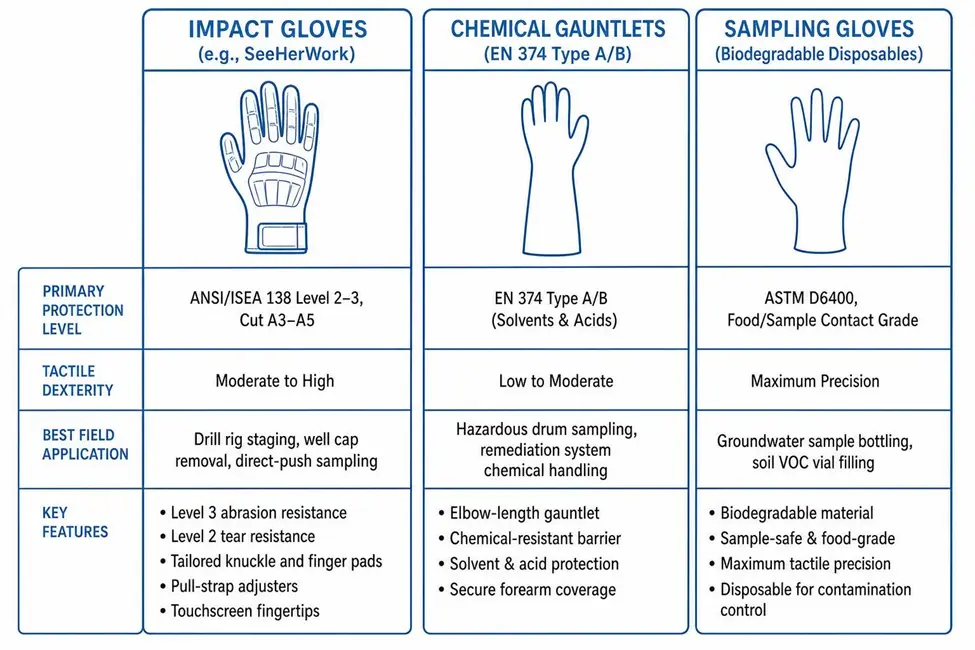
Glove Category Primary Protection Level Tactile Dexterity Best Field Application Heavy Impact Gloves (e.g., SeeHerWork) ANSI/ISEA 138 Level 2–3, Cut A3–A5 Moderate to High Drill rig staging, well cap removal, direct-push sampling Leather Gauntlet Gloves (e.g., Womanswork) High Puncture & Thorn Deflection Moderate Vegetation clearing, stream bank access, ecological surveys Chemical-Resistant Gauntlets EN 374 Type A/B (Solvents & Acids) Low to Moderate Hazardous drum sampling, remediation system chemical handling Biodegradable Sampling Disposables ASTM D6400, Food/Sample Contact Grade Maximum Precision Groundwater sample bottling, soil VOC vial filling
How Can You Verify and Source Gear from a Woman-Owned Environmental Supply Company?
Supplier diversity is a critical priority for environmental engineering firms, remediation contractors, and government agencies. Corporate Environmental, Social, and Governance (ESG) criteria and state and federal contracts frequently mandate specific Disadvantaged Business Enterprise (DBE) or Women-Owned Small Business (WOSB) participation percentages.
Sourcing field monitoring equipment, instrument rentals, and PPE from certified woman-owned suppliers meets procurement compliance mandates while delivering high-touch customer support, competitive pricing, and industry-tested gear.
Checking Certifications and Supplier Directories
To ensure a supply partner is a certified woman-owned enterprise rather than an unverified self-claimed vendor, reference trusted national and state databases:
- Women’s Business Enterprise National Council (WBENC): The gold standard for private-sector certification, confirming a business is at least 51% owned, controlled, and operated by women through detailed on-site audits and financial reviews.
- SBA Women-Owned Small Business (WOSB / EDWOSB): Administered by the U.S. Small Business Administration, this certification qualifies companies for federal set-aside contracts.
- State DOT and Unified Certification Programs (UCP): State transportation agencies maintain public DBE directories for transportation-related remediation and infrastructure projects.
- System for Award Management (SAM.gov): Search active Unique Entity Identifiers (UEI) and CAGE codes to confirm vendor compliance and small business status for federal work.
Comprehensive Field Solutions: Rentals, Instrument Calibration, and PPE
A specialized environmental supplier offers advantages that generic hardware distributors cannot match. Rather than ordering from multiple vendors, working with a full-service provider like Environmental Equipment + Supply streamlines field mobilization:
- Full-Fleet Instrument Rentals: Access calibrated, factory-serviced PIDs, water quality meters, multi-gas monitors, and peristaltic pumps that arrive pre-tested with valid calibration logs.
- Factory-Certified Calibration and Repair: In-house technicians repair and recalibrate client-owned equipment, ensuring accurate sensor response and zero downtime on active remediation sites.
- Turnkey Field Supplies: Consolidate shipments of calibration standard gases, disposable bailers, high-density polyethylene (HDPE) tubing, decon supplies, and women-specific impact gloves under a single purchase order.
How Do Sustainable PPE Options Balance Heavy-Duty Field Protection and Eco-Responsibility?
The environmental industry faces a fundamental paradox: protecting ecosystems while generating tons of single-use plastic waste each field season. Every year, an estimated 8 million metric tons of plastic waste reach global landfills, waterways, and oceans. Millions of single-use nitrile and latex gloves are discarded during routine environmental sampling, where they persist in landfills for centuries.
Forward-thinking environmental suppliers and woman-owned manufacturers are implementing sustainable alternatives that preserve worker safety and sample integrity while supporting circular supply chains.
Biodegradable Disposable Gloves for Environmental Sampling
To prevent sample cross-contamination, technicians must replace disposable gloves between every monitoring well, soil boring, or water collection station.
- Certified Biodegradability Standards: High-quality biodegradable gloves comply with ASTM D6400 (industrial composting) and EN 13432 standards. These regulations require the material to disintegrate to 10% or less of its original weight within 12 weeks and achieve greater than 90% organic biodegradation within 180 days.
- Sample Integrity and Chemical Neutrality: Sustainable disposable gloves designed for scientific use are manufactured without harmful chemical accelerators, sulfur, or plasticizers that could leach into low-level VOC, per- and polyfluoroalkyl substances (PFAS), or trace metal samples.
- Skin Health and Hypoallergenic Benefits: Certified Fair Trade natural rubber and organic-formula gloves protect technicians with eczema, psoriasis, or sensitive skin against dermatitis caused by harsh synthetic curing agents.
Recycled Performance Fibers and Circular Equipment
For reusable impact gloves and heavy work apparel, material science has developed durable, eco-friendly synthetics:
- REPREVE Recycled Performance Fibers: High-performance synthetic yarns spun from recycled post-consumer plastic bottles are woven into glove backings and internal liners. This process diverts plastic from waste streams while providing moisture-wicking comfort and cut-resistant strength.
- Durable Natural Leather and Repairability: High-grade pigskin and goatskin gauntlets offer years of multi-season service when properly conditioned, outlasting cheaper petroleum-based synthetic leathers that break down after minimal UV and rain exposure.
- Maintenance Best Practices: Field managers can significantly reduce waste by pairing biodegradable disposables for clean sampling with durable, washable impact gauntlets for equipment mobilization and physical site labor.
Frequently Asked Questions About Environmental Monitoring Equipment
What is the most critical monitoring equipment needed for groundwater remediation?
The essential toolkit for groundwater remediation includes:
- Multi-parameter water quality sondes to measure stabilization parameters (DO, ORP, pH, conductivity, temperature, and turbidity).
- Oil-water interface probes and electronic water level meters to establish hydraulic gradients and detect floating product layers.
- Low-flow sampling pumps (bladder or variable-speed peristaltic pumps) using clean fluoropolymer-lined or polyethylene tubing.
- Specialized sampling gloves (powder-free, accelerator-free nitrile or certified bio-nitrile) that prevent hand exposure to dissolved contaminants while preventing sample contamination.
How do I know if field work gloves offer true impact and crush protection?
Look for gloves certified under the ANSI/ISEA 138 standard. This standard explicitly evaluates knuckle and finger defense against falling tools, pinch points, and crushing loads:
- Level 1: Basic impact dispersion (average transmitted peak force 9 kN or less).
- Level 2: Intermediate impact protection (6.5 kN or less).
- Level 3: Maximum heavy-duty defense (4 kN or less).
Verify that impact padding covers all metacarpal bones and distal finger joints without pinching or restricting the finger dexterity needed to calibrate instruments, wire sensors, or seal sampling containers.
Why should our environmental consulting firm buy or rent from a certified woman-owned supply company?
Partnering with a certified woman-owned environmental supply company provides three clear advantages:
- Contractual Compliance: Direct supplier diversity spending helps prime contractors fulfill mandatory DBE, WOSB, and EDWOSB subcontracting goals on municipal, state, and federal infrastructure and remediation awards.
- Specialized Product Knowledge: Woman-owned safety providers offer gear built around modern ergonomic standards—including gloves, harnesses, and protective apparel tailored specifically for female field scientists.
- Streamlined Procurement: Working with full-service distributors like Environmental Equipment + Supply provides access to instrument rentals, equipment purchases, factory-certified calibration services, and PPE through a single, responsive vendor.
Conclusion: How Do You Build a Complete, High-Performance Field Monitoring Toolkit?
Executing safe, accurate, and defensible environmental fieldwork requires pairing sensitive diagnostic instruments with protective gear built for tough site conditions. From multi-parameter water sondes and photoionization detectors to impact-resistant gloves engineered for high-risk pinch points, every piece of equipment plays a direct role in crew safety and project performance.
By sourcing your testing instrumentation, calibration gases, and protective gear from a certified woman-owned enterprise like Environmental Equipment + Supply, your organization meets diversity goals while outfitting field technicians with durable, reliable, and ergonomically engineered equipment. Reach out to an equipment specialist to reserve rental instruments, schedule factory-certified calibrations, or equip your field teams with industry-leading protective gear.
Also Read-The Funny Side of Modern Life: From Shopping Habits to Workplace Technology