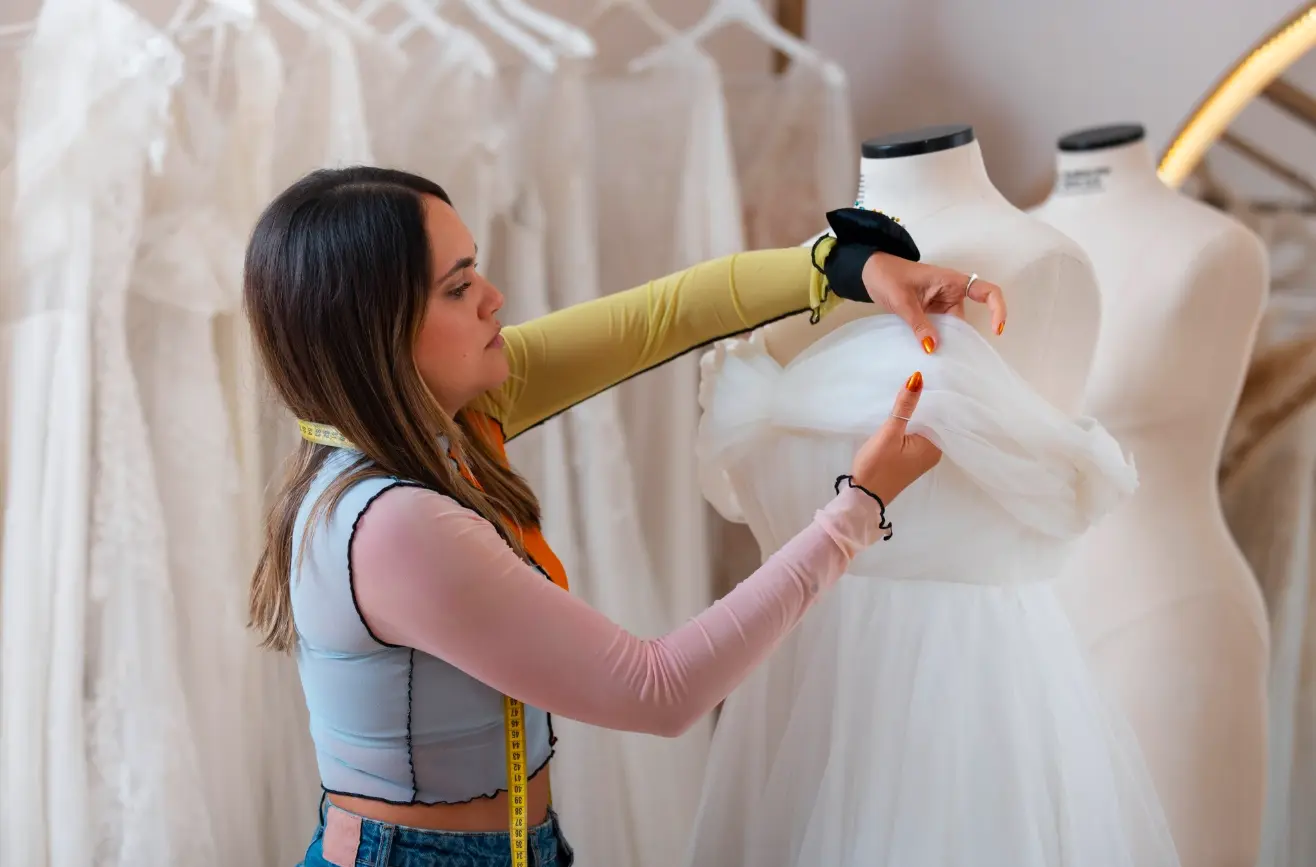

At the final fitting, the dress was perfect. As you stood still in front of a three-way mirror, the bodice lay flat, the waist sat exactly where it should, and the hem just brushed the floor. Then the photos arrive, and in several of them the neckline gapes, the fabric bunches at the hip, and a strap has slipped off one shoulder.
The reason is movement. A fitting checks a dress on a body that stands still, while a wedding day is spent hugging, sitting, dancing and lifting arms for the bouquet toss. Fixing fit problems before the wedding is usually more practical than correcting the same issue across dozens of pictures with tools that edit body in a photo, and knowing which issues belong where helps you plan for both.
Why Fittings Miss What Cameras Catch
In a fitting, you stand straight with your arms relaxed while the seamstress pins. That posture rarely lasts on the day itself. Raising your arms lifts the bodice, sitting compresses the waist, and leaning in to hug a guest pulls a strapless neckline away from the chest.
The camera also sees angles you never check in a mirror. The side view, the back during the first dance, the view from a balcony above: each shows how fabric behaves when the body turns, and that is where small fit issues become visible.
The Usual Suspects
Certain problems appear in wedding photos again and again, and most have a simple fix if you know about them before the last fitting:
- a gaping strapless bodice: ask for extra boning or a snugger top edge, then test it by bending forward;
- fabric bunching at the waist: sit down during the fitting and check the folds;
- slipping straps: ask the seamstress to shorten or reposition them, then test the fit while moving;
- a hem catching under heels: walk and dance in the actual wedding shoes;
- a bustle that tears loose: test it with a few spins across the room.
A few minutes of moving around in the dress at the fitting shows problems that standing still will not.
A Small Day-of Kit
Even a well-fitted dress needs a little help on the day. A small kit with double-sided fashion tape, safety pins, a mini sewing set and a lint roller handles many small surprises in a couple of minutes.
Just as useful is a person whose job is to glance at the dress before key photos. A maid of honor or a planner who fixes a twisted strap or a folded train before the photographer starts shooting saves editing later.
What Can Still Be Fixed Later
Some issues suit retouching after the fact. A visible bra strap, a crease across the skirt, a small red wine stain or a strap sliding off the shoulder can often be corrected convincingly.
Bigger problems are harder. A bodice that gapes in every frame or a dress that pulls across the hips all day would need to be reshaped photo by photo, and the results rarely look consistent across an album. These are worth fixing at the seamstress rather than in editing. Wedding photos record a long day of movement, not a single pose in front of a mirror. Fit the dress for that day: sit, bend, dance and hug during the fitting, pack the kit, and leave editing for the small accidents no seamstress could have predicted.
Also Read
- BBW Meaning in Text, Chat & Dating (Updated 2026)
- “Consume Less Alcohol”: Why the New Dietary Advice Leaves Some Drinkers Guessing
- Essential Features to Look for in a Whole Home Air Conditioning System



2 thoughts on “The Wedding Dress Fit Issues Photos Reveal (and Which Ones Can Be Fixed Later)”