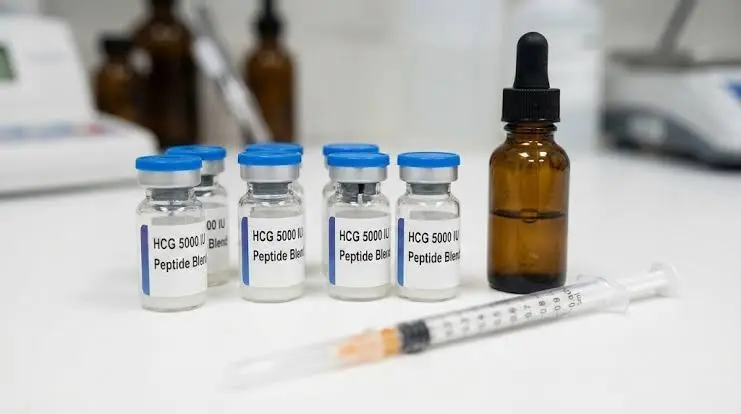

Human chorionic gonadotropin, commonly known as HCG, is a naturally occurring glycoprotein hormone that has an important role in human reproductive biology. It is best known for its production during pregnancy, but its structure and interaction with hormone receptors have also made it an interesting subject in endocrinology and peptide research.
Although HCG is often referred to as an “HCG peptide”, the terminology can be slightly misleading. HCG is technically a glycoprotein hormone, meaning it is a protein-based molecule with carbohydrate groups attached to it. Its biological activity comes from its interaction with specific receptors involved in reproductive hormone signalling.
Understanding HCG requires looking beyond its association with pregnancy. Its molecular structure, receptor activity and relationship with other reproductive hormones provide useful insight into how the endocrine system communicates.
This article discusses HCG from an educational and scientific perspective. The material is intended for general information and research education only and is not intended for human consumption, self-administration or medical use.
What Is HCG?
Human chorionic gonadotropin is a hormone produced naturally by cells associated with the developing placenta. Its production begins relatively early during pregnancy and becomes one of the key hormonal signals associated with early gestation.
Structurally, HCG belongs to the gonadotropin family of hormones. It shares important similarities with other reproductive hormones, particularly luteinising hormone (LH).
This similarity is significant because HCG can interact with the same receptor used by LH, known as the luteinising hormone/choriogonadotropin receptor (LHCGR).
Rather than thinking of HCG peptide uk as simply a “pregnancy hormone”, it is more accurate to view it as part of a broader reproductive signalling system. Its molecular structure allows it to activate pathways involved in gonadal function and steroid hormone production.
How Is HCG Structured?
HCG is composed of two protein subunits known as the alpha subunit and the beta subunit.
The alpha subunit is shared with several other glycoprotein hormones, including:
- Luteinising hormone (LH)
- Follicle-stimulating hormone (FSH)
- Thyroid-stimulating hormone (TSH)
The beta subunit provides much of the specificity that distinguishes HCG from these other hormones.
This two-subunit structure is an important feature when studying HCG because the molecule’s biological properties are determined by more than just its amino acid sequence. The attached carbohydrate structures also influence characteristics such as stability, molecular behaviour and biological activity.
HCG therefore provides a useful example of how protein structure and post-translational modifications can affect hormone function.
HCG and the LH Receptor
One of the most important aspects of HCG research is its relationship with LH.
Both HCG and LH can interact with the LHCGR. This receptor is primarily associated with reproductive tissues, including the gonads.
When the receptor is activated, it initiates intracellular signalling pathways that ultimately influence steroidogenesis and other reproductive processes.
The relationship between HCG and LH is particularly interesting because HCG generally has a longer biological persistence than naturally occurring LH. This difference is partly related to structural characteristics of the two hormones.
From a research perspective, this makes HCG useful when studying prolonged activation of the LH/choriogonadotropin receptor system.
Why Does the Body Produce HCG?
During pregnancy, HCG has an important role in maintaining the hormonal environment required during the early stages of gestation.
One of its key functions is associated with the corpus luteum, a temporary endocrine structure formed after ovulation. Early in pregnancy, HCG signalling helps maintain the corpus luteum so that it can continue producing progesterone.
Progesterone is essential for maintaining the uterine environment during early pregnancy.
As pregnancy progresses and placental hormone production develops, the physiological role of the corpus luteum changes. HCG levels also change considerably over the course of pregnancy, making its pattern of production an important subject in reproductive endocrinology.
Why Is HCG Used in Pregnancy Testing?
The ability to detect HCG is one of the most familiar applications of the hormone.
Pregnancy tests work by identifying HCG or specific components of the hormone in biological samples. Modern testing methods can detect relatively small concentrations, which is possible because HCG production increases significantly after implantation.
Laboratory testing can measure HCG concentrations quantitatively, while home pregnancy tests generally provide a qualitative result based on whether HCG reaches a particular detection threshold.
This makes HCG an interesting example of how a naturally occurring hormone can also serve as a measurable biological marker.
How Is HCG Studied in Research?
Researchers can study HCG in several different ways depending on the scientific question.
One area involves molecular and structural analysis. Researchers examine the hormone’s subunits, carbohydrate modifications and three-dimensional characteristics to better understand how its structure relates to receptor interaction.
Another area focuses on receptor signalling. Because HCG interacts with LHCGR, researchers can investigate the cellular pathways activated following receptor binding.
Studies may also examine HCG alongside LH and other reproductive hormones to understand similarities and differences in their activity.
Laboratory models can be particularly useful for examining these mechanisms without relying on whole-organism observations. Cell-based systems, biochemical assays and other experimental approaches can help researchers isolate specific parts of HCG biology.
HCG vs LH: Why the Difference Matters
HCG and LH are closely related, but they are not identical.
Both can interact with the same major receptor, yet their physiological roles and production patterns differ.
LH is produced by the pituitary gland and plays a central role in the normal reproductive cycle. Its levels can fluctuate substantially, including a pronounced surge associated with ovulation.
HCG, on the other hand, is primarily associated with pregnancy and is produced by placental tissue.
The structural differences between the hormones also affect their biological characteristics. This makes comparing HCG and LH useful for researchers at UK peptides investigating how closely related hormones can produce different physiological patterns.
What Makes HCG Interesting as a Research Molecule?
HCG is particularly valuable as a research subject because it sits at the intersection of several areas of biology.
It provides insight into:
- Glycoprotein hormone structure
- Receptor-ligand interactions
- Reproductive endocrinology
- Intracellular signalling
- Steroid hormone production
- Pregnancy-related endocrine changes
- Protein glycosylation and biological activity
Its relationship with LH also makes it a useful example of how evolutionary similarities between hormones can translate into shared receptor activity.
Rather than being interesting simply because it is associated with pregnancy, HCG offers a broader look at how hormones communicate with cells and influence downstream biological pathways.
HCG in the Broader Context of Peptide Research
HCG is somewhat different from many compounds commonly described as peptides. Its relatively complex structure places it within the family of glycoprotein hormones rather than the simpler peptide hormones that are often discussed in modern peptide research.
That distinction matters when evaluating research materials or scientific literature. Different peptide and protein hormones can have very different structural characteristics, receptor interactions and stability profiles.
HCG demonstrates that the term “peptide” can sometimes be used broadly in commercial and general discussions even when a molecule has a more specific biochemical classification.
For anyone studying hormone biology, understanding that distinction helps provide a more accurate picture of how these molecules function.
Final Thoughts
HCG is a naturally occurring glycoprotein hormone with a distinctive role in human reproductive biology. Its production during pregnancy, structural relationship with other gonadotropins and ability to interact with the LH/choriogonadotropin receptor make it an important subject within endocrinology.
From a research perspective, HCG provides an opportunity to study several interconnected areas, including hormone structure, receptor signalling, reproductive physiology and protein modification.
Its similarities to LH are particularly useful for understanding how related hormones can interact with the same receptor while having different physiological roles and production patterns.
Ultimately, HCG is more than simply a hormone detected by pregnancy tests. Its molecular structure and signalling behaviour make it a valuable model for understanding the complexity of endocrine communication.
This article is provided for educational and scientific information only. HCG discussed here is not intended for human consumption, self-administration or use as a medical treatment.
Also Read
- https://punzteam.com/birthday-invitation-maker-ideas-for-modern-technology-themed-parties/
- how-can-a-plumber-diagnose-sewer-line-problems-before-they-become-emergencies/
- 176+ Mountain Puns That Are Peak Comedy For 2k26 ⛰️😂 | Funny, Clever & Instagram-Ready Jokes