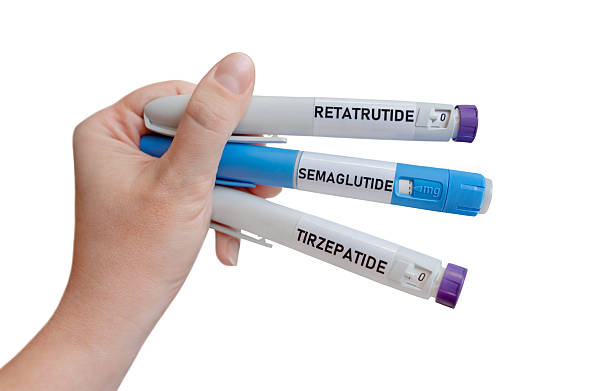

Semaglutide and retatrutide are two names that frequently appear in conversations about modern peptide research. Both are associated with GLP-1 signalling, but they are far from identical.
Semaglutide is a GLP-1 receptor agonist, while retatrutide is designed to activate three receptors: GLP-1, GIP and glucagon. That difference gives researchers two very different approaches to studying metabolic signalling.
So, when comparing retatrutide and semaglutide, the most useful question is not simply which compound is “stronger”. Instead, it is worth looking at how they work, why their receptor profiles differ and what those differences mean for peptide research.
Starting With Semaglutide
Semaglutide is a long-acting GLP-1 receptor agonist. GLP-1, or glucagon-like peptide-1, is a naturally occurring hormone involved in several physiological processes, including glucose-dependent insulin secretion, appetite signalling and gastrointestinal function.
Semaglutide glp-1 was developed by modifying the structure of a GLP-1 analogue to make it considerably more resistant to degradation and longer-lasting than naturally occurring GLP-1.
This is one reason semaglutide became an important reference point in peptide research. It provides a relatively well-characterised example of what can happen when researchers focus on sustained GLP-1 receptor activation.
When newer compounds are introduced, semaglutide can therefore provide useful context for understanding what changes when additional receptor pathways are added.
What Is Retatrutide?
Retatrutide takes a different approach.
Rather than targeting the GLP-1 receptor alone, retatrutide is a triple receptor agonist designed to activate:
- GLP-1 receptors
- GIP receptors
- Glucagon receptors
This combination is one of the main reasons retatrutide has attracted interest within peptide research.
GIP stands for glucose-dependent insulinotropic polypeptide, another hormone involved in metabolic signalling. Glucagon is also an important metabolic hormone, although its biological effects differ from those of GLP-1 and GIP.
Bringing all three pathways together creates a much more complex pharmacological question than studying GLP-1 activity alone.
Research into retatrutide has consequently focused on understanding how these pathways interact and what happens when they are activated by the same molecule. Reviews of the compound describe it as a GLP-1/GIP/glucagon receptor agonist and highlight the additional research questions created by glucagon receptor activity.
The Simplest Difference Between Them
The easiest way to understand the distinction is through their receptor profiles.
Semaglutide: GLP-1 receptor agonist
Retatrutide: GLP-1 + GIP + glucagon receptor agonist
This may look like a straightforward progression, but receptor biology is considerably more complicated than simply adding another pathway.
Each receptor activates its own signalling processes, and the way those pathways interact can affect the overall pharmacological behaviour of a compound.
That is why researchers cannot assume that retatrutide will simply produce “more” of the same activity associated with semaglutide. It is better understood as a different research model with a broader receptor profile.
Why Add GIP?
GIP has become an increasingly important subject in metabolic peptide research.
Like GLP-1, GIP is an incretin hormone released in response to food. Both hormones are involved in regulating insulin secretion, although their biological roles are not identical.
The development of dual GLP-1/GIP agonists such as tirzepatide has helped increase interest in what happens when the two pathways are activated together. Research reviews continue to examine the distinct and overlapping roles of GIP and GLP-1 and how their receptors contribute to metabolic signalling.
Retatrutide takes this concept one step further by incorporating glucagon receptor activity as well.
For researchers, this creates an opportunity to study whether simultaneous activation of three pathways produces a different biological profile from single- or dual-receptor approaches.
What About the Glucagon Receptor?
This is arguably the most distinctive part of retatrutide.
Glucagon has a very different role from GLP-1. It is involved in maintaining blood glucose levels, particularly during periods when glucose availability is lower, and it also plays a role in energy metabolism.
That makes glucagon receptor activation an interesting area of research when combined with incretin pathways.
However, it is important not to oversimplify this mechanism. The biological effects of glucagon are complex, and researchers are still investigating how glucagon receptor activation interacts with GLP-1 and GIP signalling in multi-receptor compounds.
This is precisely why retatrutide peptide is scientifically interesting: it allows researchers to investigate a combination of pathways rather than treating each one separately.
Retatrutide vs Semaglutide: A Research Perspective
From a research perspective, the two compounds can be viewed as representing different stages of multi-pathway peptide development.
Semaglutide provides an example of a long-acting compound centred on GLP-1 receptor activation.
Retatrutide provides an example of a multi-receptor strategy involving GLP-1, GIP and glucagon.
That difference can help researchers ask more specific questions.
For example, what changes when GIP receptor activity is introduced? What additional questions arise when glucagon receptor activity is included? How do the pharmacokinetic properties of different peptide structures influence experimental observations?
These questions are more useful than simply asking which compound is better.
Where Does Tirzepatide Fit?
Tirzepatide provides an interesting middle point when comparing semaglutide and retatrutide.
Tirzepatide activates both GLP-1 and GIP receptors, making it a dual agonist. The current FDA label describes tirzepatide as a GIP and GLP-1 receptor agonist.
This gives us a simple three-part comparison:
Semaglutide → GLP-1
Tirzepatide → GLP-1 + GIP
Retatrutide → GLP-1 + GIP + glucagon
This does not mean that these compounds form a simple ladder where each additional receptor automatically makes a compound better. Instead, they demonstrate different approaches to manipulating interconnected metabolic pathways.
For someone new to peptide research, this comparison can make the development of multi-receptor compounds easier to understand.
Why Direct Comparisons Can Be Difficult
It is tempting to compare compounds based on receptor count alone, but that can be misleading.
Two peptides can target some of the same receptors while still having different molecular structures, receptor preferences, signalling characteristics and pharmacokinetic profiles.
Even within the scientific literature, researchers continue to investigate exactly how multi-receptor compounds such as tirzepatide produce their effects. One review, for example, noted that the precise contribution of GIP receptor activation to tirzepatide’s overall activity remains an area of scientific investigation.
The same caution applies when discussing retatrutide. Its three-receptor profile is distinctive, but the presence of three targets alone does not explain the complete biological behaviour of the molecule.
What Should Researchers Consider When Comparing Materials?
There is another side to comparing peptides that has nothing to do with receptor biology: the quality and documentation of the research material.
Researchers may consider factors such as reported purity, identity testing, batch information, analytical methods and storage requirements. These details can be particularly important when experiments need to be reproduced or compared over time.
A supplier such as British Peptides may be one source researchers investigate when looking for research materials and accompanying documentation.
The key point is to evaluate the actual documentation available for a specific batch rather than relying entirely on general product descriptions. A peptide’s name does not, by itself, establish its purity or analytical characteristics.
Why Retatrutide Is Interesting for Future Research
The growing interest in retatrutide reflects a broader shift towards multi-receptor peptide research.
Researchers are no longer looking only at individual hormone pathways. There is increasing interest in how several related signalling systems might interact when targeted simultaneously.
Retatrutide represents one of the clearest examples of this approach because it combines GLP-1, GIP and glucagon receptor activity. Semaglutide, by comparison, offers a useful reference for understanding a primarily GLP-1-based approach.
This contrast can help researchers investigate whether different receptor combinations produce meaningfully different biological responses.
It also explains why retatrutide continues to appear in discussions about the future direction of metabolic peptide research.
Practical Research Considerations
For anyone working with research peptides, understanding the mechanism is only part of the process.
Consistency matters. Researchers may need to consider how materials are stored, how they are characterised and whether appropriate documentation is available. Where possible, experimental conditions should also be recorded carefully so that findings can be interpreted in context.
For those evaluating sourcing options, Pure Peptides UK is another UK research-peptide supplier that can be considered when reviewing available materials and documentation.
None of these considerations replaces proper laboratory controls. Instead, they form part of the wider process of making peptide research more reproducible and easier to interpret.
The Bigger Picture
Retatrutide and semaglutide are often discussed together because both involve GLP-1 signalling, but their similarities largely end there.
Semaglutide represents a long-acting GLP-1 receptor agonist, while retatrutide is designed to activate GLP-1, GIP and glucagon receptors. Tirzepatide sits between them in terms of receptor profile, combining GLP-1 and GIP activity.
For researchers and informed readers, these differences provide a useful way to understand how peptide science is evolving.
Rather than viewing retatrutide as simply a newer version of semaglutide, it is more accurate to see the two as different research tools with different pharmacological profiles. Studying those differences may help researchers better understand the relationships between GLP-1, GIP and glucagon signalling and why multi-receptor peptides have become such an important area of investigation.
Research disclaimer: This article is for general educational and research-information purposes only. It is not medical advice and does not provide treatment recommendations or dosing instructions. Retatrutide, semaglutide and other research compounds should be evaluated and handled in accordance with applicable regulations, laboratory procedures, supplier documentation and appropriate professional standards.
Read more: https://punzteam.com/exchange-bitcoin-btc-for-tether-trc20-usdt/
https://punzteam.com/waste-solutions-for-removing-outdated-home-features/
https://punzteam.com/birthday-invitation-maker-ideas-for-modern-technology-themed-parties/